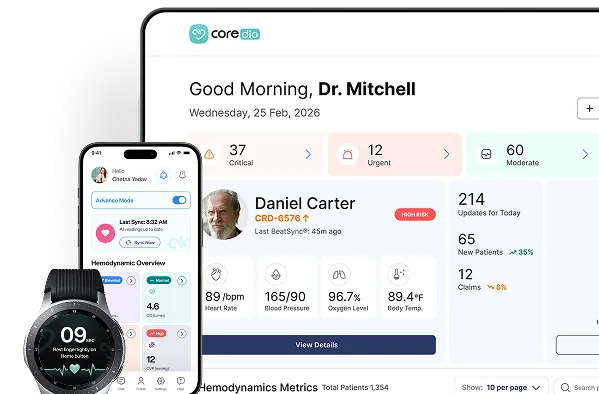
Better patient outcomes, stronger quality metrics, lower cost of care
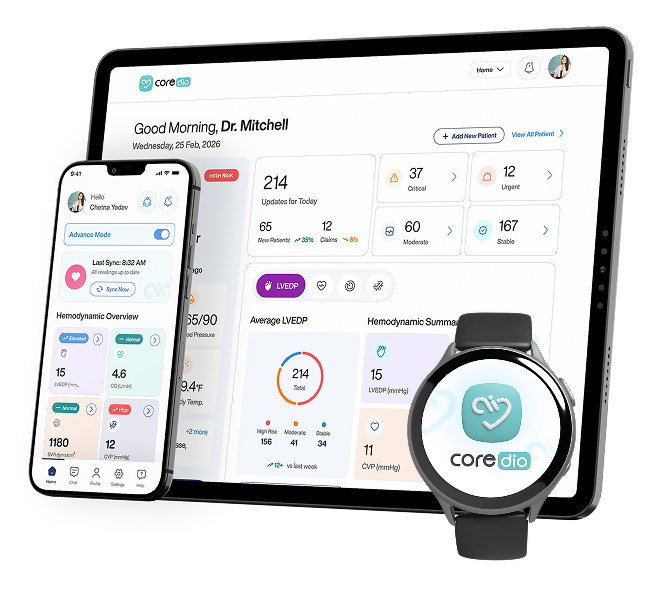
Patient-specific setup for accurate baseline measurements
data capture from wearable and BP cuff.
AI-powered analysis of cardiovascular metrics
Real-time alerts and trend analysis for care teams
Where it fits
Outpatient cardiology visits and at-home monitoring.
Who uses it
Cardiologists, nurses, and primary care physicians.
Why it matters
Earlier visibility into rising filling pressures or falling cardiac output, before symptoms.
Post-procedure and post-discharge cardiology follow-up.
Interventional cardiologists and clinic nurses.
Track hemodynamic status between visits without repeat invasive measurements.
30, 60, and 90 days after hospital discharge.
Hospital care teams and primary care.
Aimed at reducing 30-day readmissions, currently under evaluation in active IRB studies.
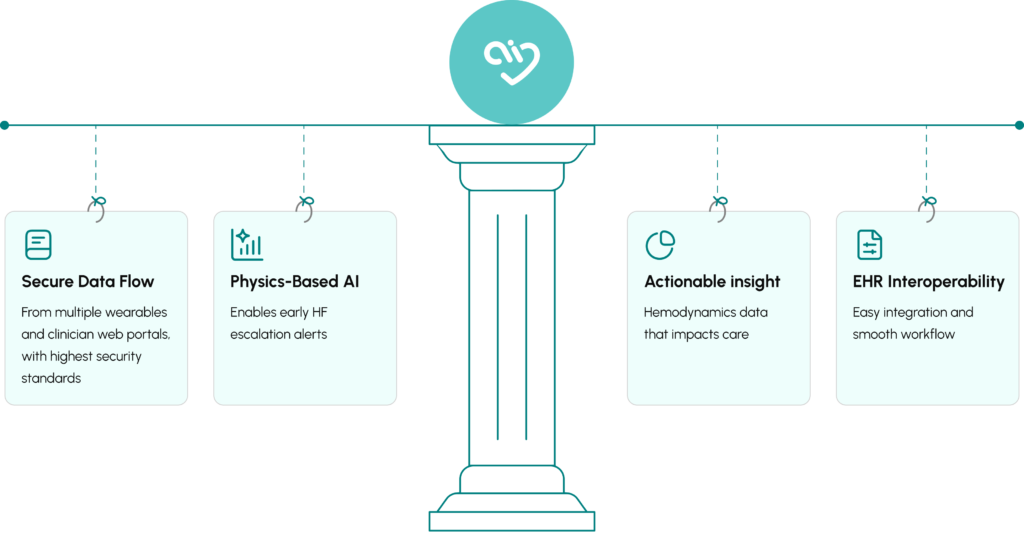
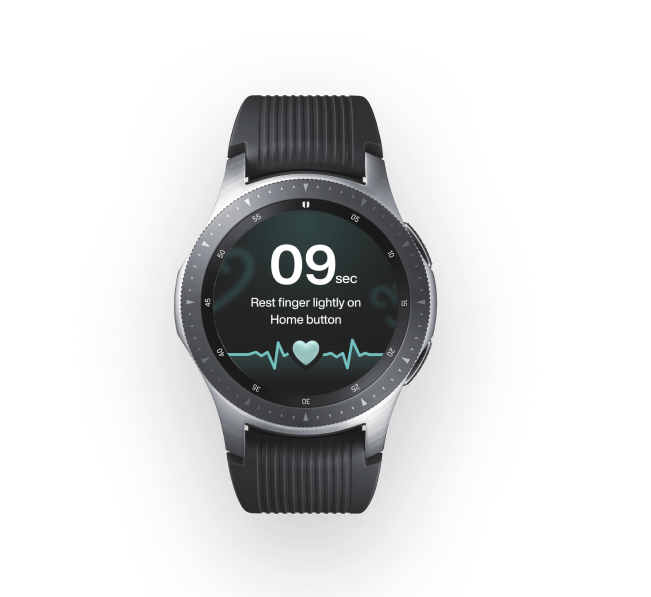
No. Coredio works with a consumer smartwatch and a standard blood pressure cuff. No implants, no needles, no procedures. Coredio’s physics-based AI extracts hemodynamic insights from those signals and surfaces them to your care team.
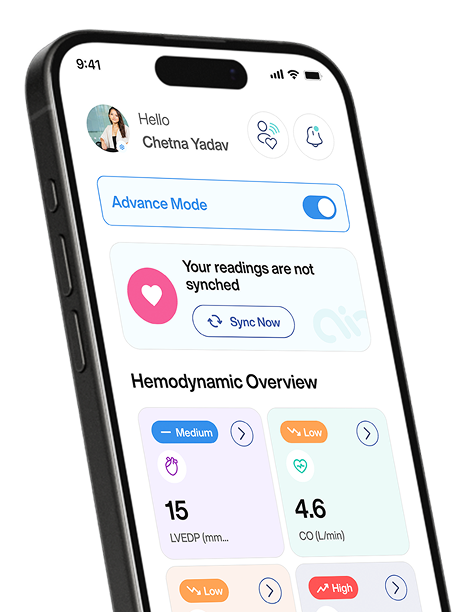
Every heart is different. Coredio builds a model from your own baseline measurements, then tracks your individual cardiovascular trends over time and shares them with your clinician. The aim is earlier, smarter intervention before a small change becomes a serious one.
Once Coredio is available through your care team, they will check whether your smartwatch is compatible and provide a standard blood pressure cuff.
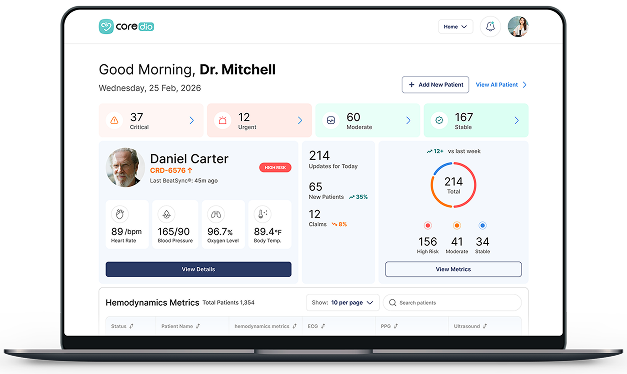
Both sides of the care relationship. Cardiologists, primary care physicians, Nurses and rest of the care team use Coredio’s dashboard to remotely spot-check heart failure patients and catch concerning trends early. Patients use a smartwatch and our app to stay connected to their care team from home. Caregivers and family members often help with initial setup and patient adherence.
Join the clinicians who are exploring the future of cardiovascular monitoring